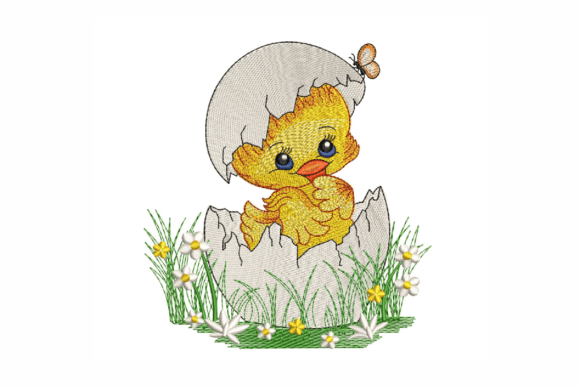
Easter Chick: A Designer's Review for Real Projects
As a designer who has spent years navigating the delicate balance between digital files and physical thread, I approach every new machine embroidery design with a critical eye. When I first opened the file for Easter Chick, my immediate goal wasn't just to see a cute image; it was to evaluate its viability for a small business product line or a high-end personalized gift. The description promises this is "the most adorable embroidery design" for creative projects, but in our industry, cuteness must be backed by technical execution to truly sell.
First Impressions: Visual Weight and Character
The initial visual impact of Easter Chick is undeniably charming. It captures that quintessential springtime energy without feeling cluttered. In the context of holiday embroidery, simplicity often wins over complexity. This design leans heavily on clean lines and a friendly silhouette, which suggests it will stitch out quickly while maintaining a professional look. The layout feels balanced, avoiding the common pitfall of designs that look great on a screen but get lost in the fabric grain.
When I visualize this as a tote bag design or a patch for a denim jacket, the character stands out. The use of what appears to be a mix of fill stitch for the body and potentially satin stitch for the beak and feet creates a necessary textural contrast. This distinction is crucial for handmade products where tactile quality influences customer perception. If you are an Etsy seller looking to elevate your shop's aesthetic, a design like this offers that "boutique" feel without requiring hours of manual finishing.
Testing the Waters: A Real-World Scenario
To truly understand how Easter Chick performs, I imagined a specific project: creating a limited run of organic cotton baby onesies for a local boutique. Baby items require softness, durability, and safety. I pictured placing the chick on the chest area of a cream-colored garment. The light color palette of the design would likely pop beautifully against the neutral background, creating a warm, inviting look perfect for a personalized gift.
In this scenario, the stitch density becomes a focal point. If the design is too dense, the fabric might pucker, making the onesie uncomfortable for a newborn. If it is too sparse, the details might bleed through to the other side. My instinct with Easter Chick is that it strikes a good middle ground, but this is exactly why a test run is non-negotiable. I would place the hoop on a scrap piece of the exact same cotton blend, using the recommended stabilizer, and stitch a sample before committing to the full production run. This step ensures that the final finished product maintains its structural integrity after multiple washes.
Material Matters: Fabric and Hoop Considerations
While Easter Chick seems versatile, not all fabrics play nice with every design. For custom apparel like sweatshirts, the texture of the fleece can sometimes interfere with intricate details. If the chick features tiny eyes or delicate wing feathers, those elements might get swallowed by the loop pile of a heavy hoodie. In such cases, I would recommend using a tear-away stabilizer and perhaps adjusting the placement to a flatter area of the garment.
Conversely, for embroidered patch applications on caps or hats, the curved surface adds another layer of complexity. The hoop size must be compatible with the cap's brim or crown curvature. If the design requires a large hoop, it might be difficult to secure properly on a standard baseball cap. Always verify the required hoop size against your intended product dimensions. If you are working with thin or stretchy fabrics, such as jersey knit for t-shirts, the tension settings on your machine will need fine-tuning to prevent the fabric from distorting around the stitches.
Strategic Use for Small Business Owners
For the craft business owner, time is money. A design like Easter Chick needs to offer efficiency without sacrificing quality. Since the product description mentions it comes with multiple embroidery file formats, this is a significant advantage. Whether you are using a Brother, Bernina, or Janome machine, having the correct digital embroidery file ensures compatibility and reduces the headache of converting files, which can sometimes alter the stitch path.
Consider the potential for commercial embroidery projects. If you plan to sell these designs as part of a larger collection, consistency is key. Does Easter Chick align with your brand's existing style? If your shop specializes in rustic, earthy tones, a bright yellow chick might feel out of place unless you adjust the thread colors. One of the best ways to test this is to create a printable mockup in black and white first. This helps you judge the value and contrast without the distraction of color, ensuring the design reads clearly even when scaled down.
Practical Designer Notes for Success
- Test First: Never skip the test stitch on scrap fabric. Check for puckering, skipped stitches, or thread breakage.
- Stabilizer Selection: Match the stabilizer to the fabric weight. Heavyweight items need tear-away; knits often benefit from cut-away or water-soluble options.
- Color Contrast: Ensure the thread colors stand out against the fabric. Dark fabrics may require underlay adjustments to make the chick pop.
- Licensing Check: Before selling any handmade product featuring this design, confirm the licensing terms. Can you sell the finished item? Can you resell the design assets? Clarity here protects your business.
- Placement Strategy: Think about where the design sits. On a kitchen towel, centering it makes sense. On a pillow cover, off-center might look more modern.
Final Verdict: Is Easter Chick Worth the Stitch?
After analyzing the visual appeal and practical application, Easter Chick emerges as a strong contender for seasonal collections. It embodies the joy of the season while offering enough versatility to fit various embroidery project types. From baby embroidery to holiday gifts, its friendly nature appeals to a broad audience. However, its success ultimately depends on the designer's attention to detail regarding fabric choice, stabilizer usage, and machine settings.
If you are looking to add a touch of spring to your inventory, this design provides a solid foundation. Just remember that the magic happens not just in the file download, but in the careful preparation and execution of the stitch. By treating Easter Chick with the respect it deserves—testing thoroughly and choosing the right materials—you can create a small shop product that customers will love and return to year after year. Whether you are a hobbyist or a seasoned pro, this design invites creativity while demanding precision, making it a worthy addition to your digital library.